



Hawaiian Magic Mushrooms: Origins and Genetics
The Psilocybe cubensis strain commonly associated with Hawaii, often called “PES Hawaiian,” has an intriguing history. First introduced by Honolulu-based spore distributor Plantasia Exotica Speciosa (P.E.S.), this strain became popular for its mild effects and forgiving nature.
Despite its name, Psilocybe cubensis is not native to Hawaii. The term “Hawaiian mushrooms” generally refers to unofficial cultivars, such as PES Hawaiian, rather than wild varieties from the islands.
These mushrooms are known for their reliable growth and moderate psychoactive effects. This has made them quite popular for quite some time, even though their origins have more to do with the efforts of (amateur) mycologists than with natural Hawaiian ecosystems.
Acid Shroomz Hawaii Liquid Culture Development
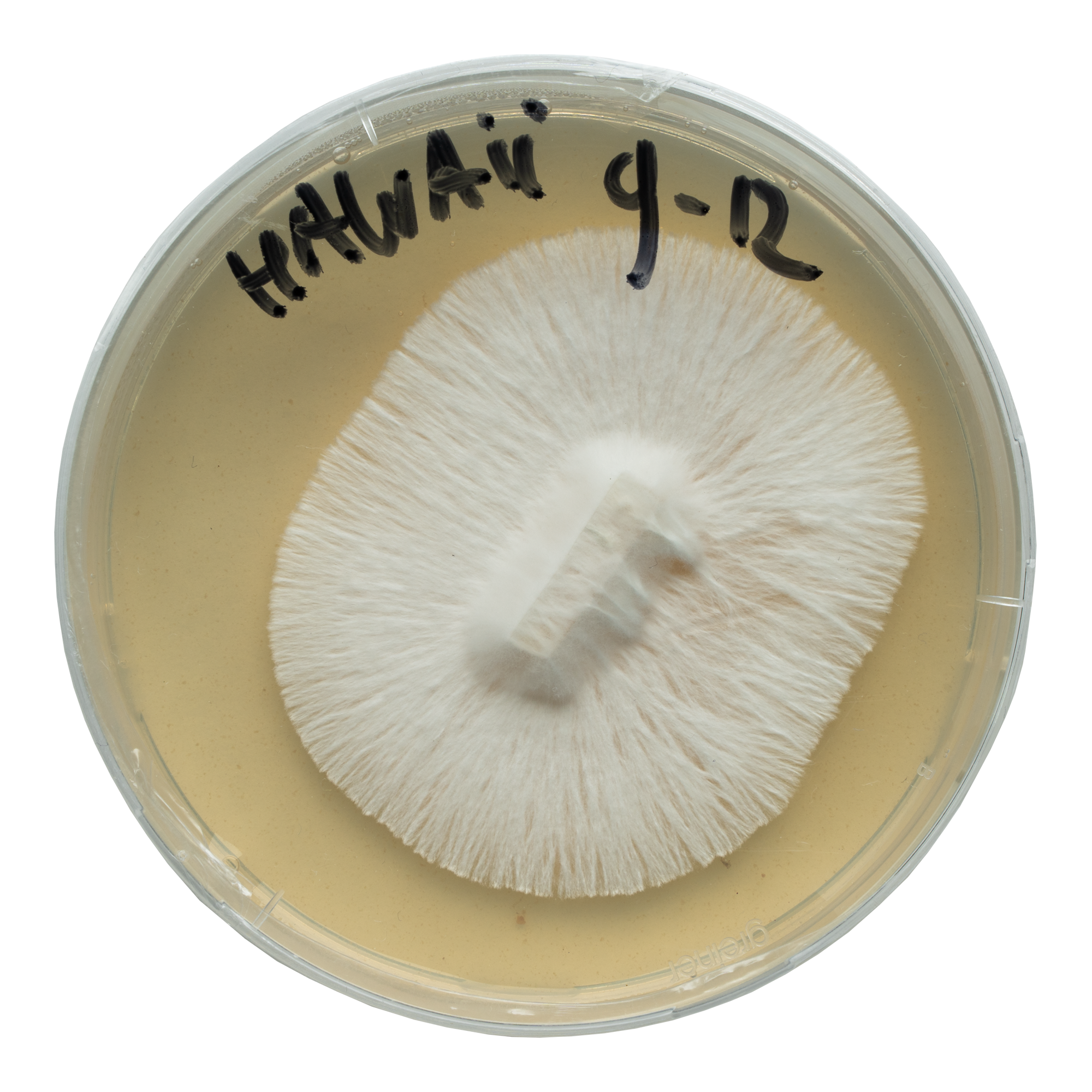
We began developing our Hawaiian liquid culture using Hawaiian spores, which we germinated on agar nutrient media. Once the spores germinated and formed several mycelium colonies, we selected the healthiest sections. These selected sections were then added to a sterilized grain substrate.
After two to three weeks, the substrate was fully colonized, prompting us to stimulate the mycelium to produce mushrooms. We selected a promising specimen and cloned the mycelium onto agar. Following this, we subjected the mycelium to several rounds of isolation, which resulted in a pure culture. Finally, we tested this culture one last time to ensure its high quality.
The resulting Hawaii culture colonizes substrates quickly, is resistant to contamination, and produces mushrooms of medium strength. It produces medium to large magic mushrooms with caramel-colored caps and often grows in multiple flushes.
Product Contents
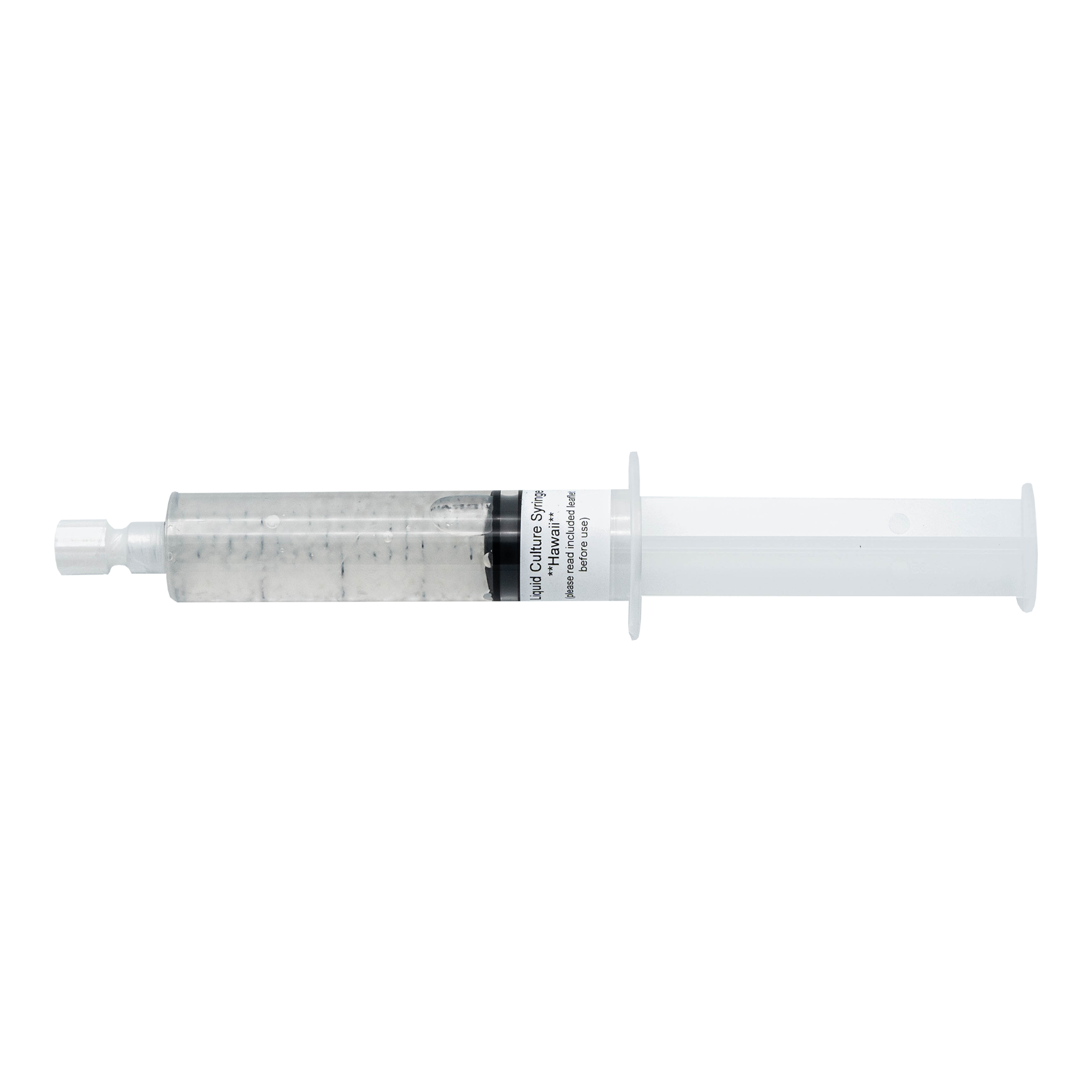
Each Hawaii syringe contains 20 ml of live mycelium in a carefully formulated nutrient solution. The syringe is a high-quality B. Braun model for precise handling and inoculation.
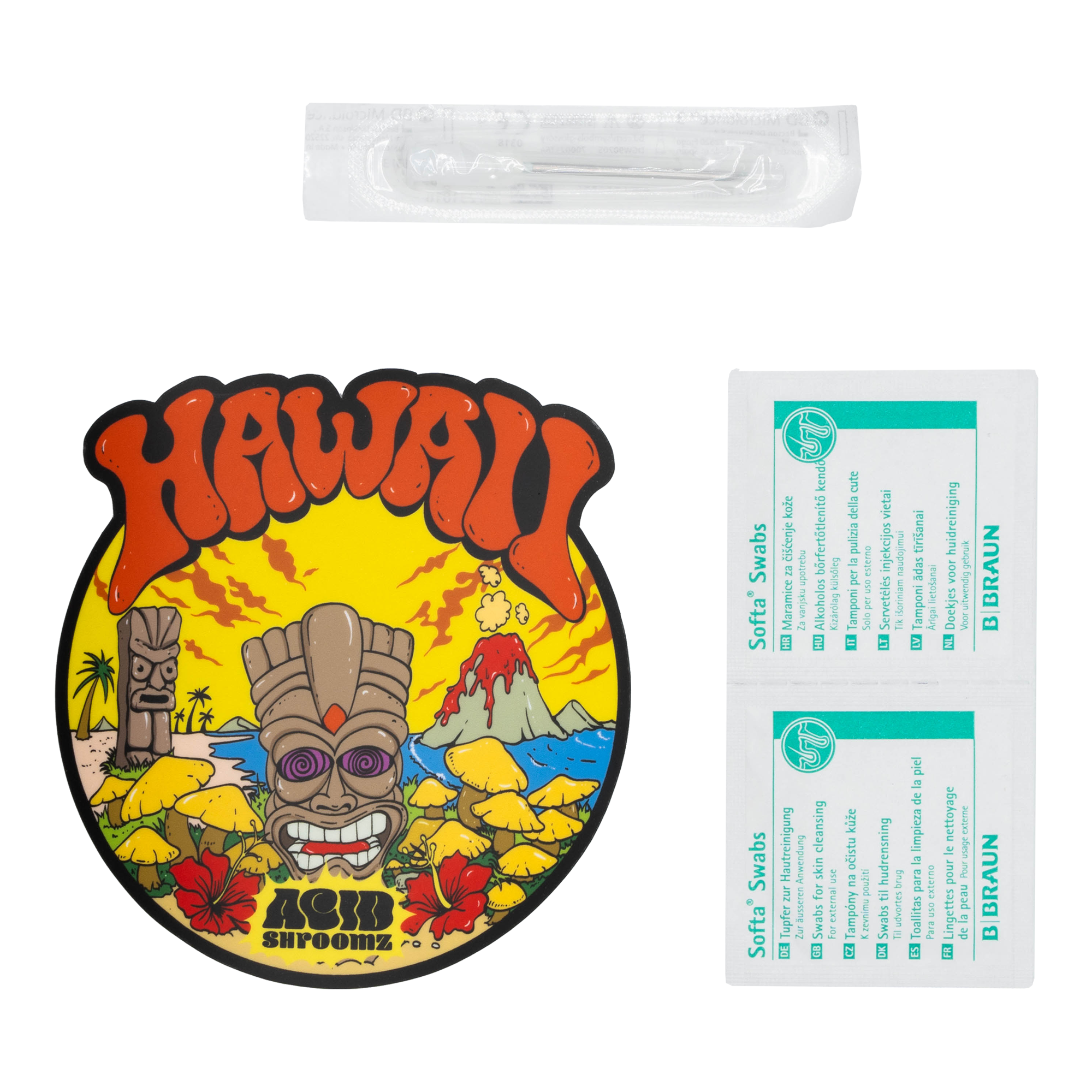
Additionally, the product packaging contains two 70% isopropyl alcohol wipes, a sterile 16G syringe needle, and an instruction leaflet.
How to Use a Hawaii Liquid Culture Syringe
For more information, check out our articles on using liquid culture syringes.
Safety Precautions and Handling
When handling the Hawaii liquid culture syringe, it is crucial to follow proper safety precautions to avoid contamination and ensure a successful growth process. Here are some general guidelines to keep in mind:
- Always handle the syringe in a clean and sterile environment.
- Wear powder-free nitrile gloves and a face mask to prevent contamination.
- Make sure there is little to no airflow in your workplace.
- Avoid touching the needle or the liquid culture directly to maintain sterility.
- Store the syringe in a refrigerator at 4-7°C to prolong its shelf life.
Optional Accessories
Consider using a flow hood or still air box (SAB) for added sterility during the inoculation of substrates.
General Data
| Species | Psilocybe cubensis |
| Genetics | Variety from Hawaii |
| Spores | Purple to brown |
| Applications | Microscopy, research, and taxonomy purposes. |
| Skill level | Beginner |
| Colonization speed | Fast |
| Potency | Medium |
Cultivation Data
| Spawn phase | |
| Suitable substrates | Sterilized grains like brown rice, rye, oats, millet, popcorn, or wild bird seed. |
| Colonization time | 9-14 days (2/3 filled liter jar / 27°C / shaken at 25-33% colonization). |
| Temperature | 25-27°C |
| Light | Low light or darkness. |
| Fruiting phase | |
| Suitable substrates | Manure, coco coir, CVG, or straw (adequately hydrated and heat-treated). |
| Temperature | 21-25°C |
| Relative humidity | 80-100% |
| Fresh air exchange (FAE) | Ensure good airflow without substrate drying. |
| Light | Indirect daylight or soft artificial light (roughly 6500 Kelvin). |
Notes
This product has a limited shelf life and is not eligible for return. For more information, see our page on reflection period and returns.

Reviews
There are no reviews yet