


Mycelium is the underground network of fungi and forms the foundation of mushrooms, as well as an increasing number of sustainable applications. Although mycelium is usually invisible, it plays a key role in ecosystems, food production, and innovative materials.
In this article, you will learn what mycelium is, how to cultivate it, and why it is used in such a wide variety of applications.
Table of Contents
What is mycelium?
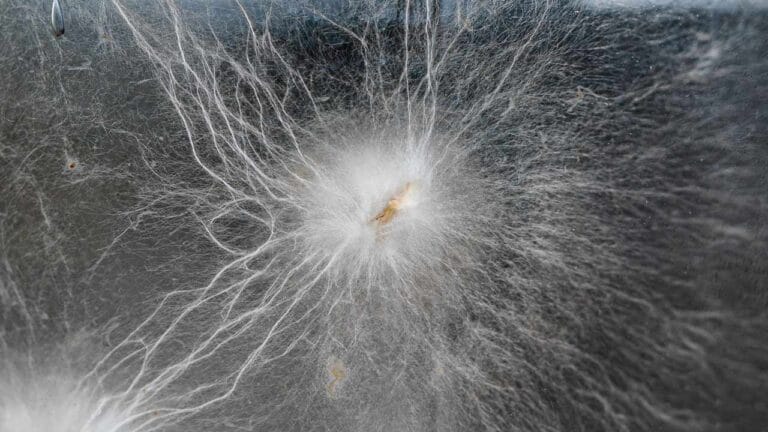
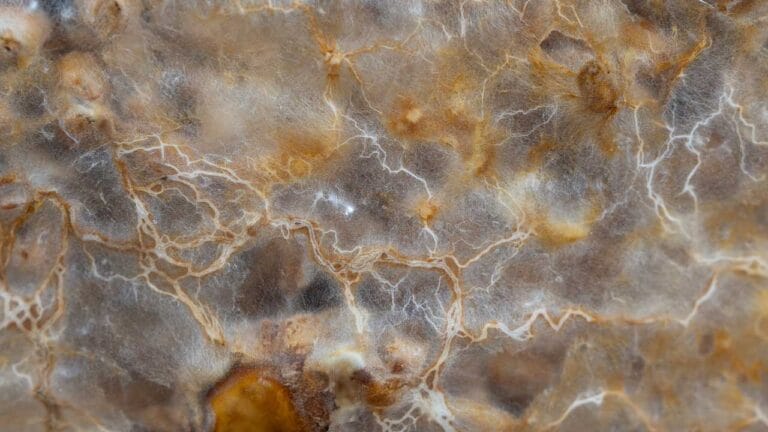
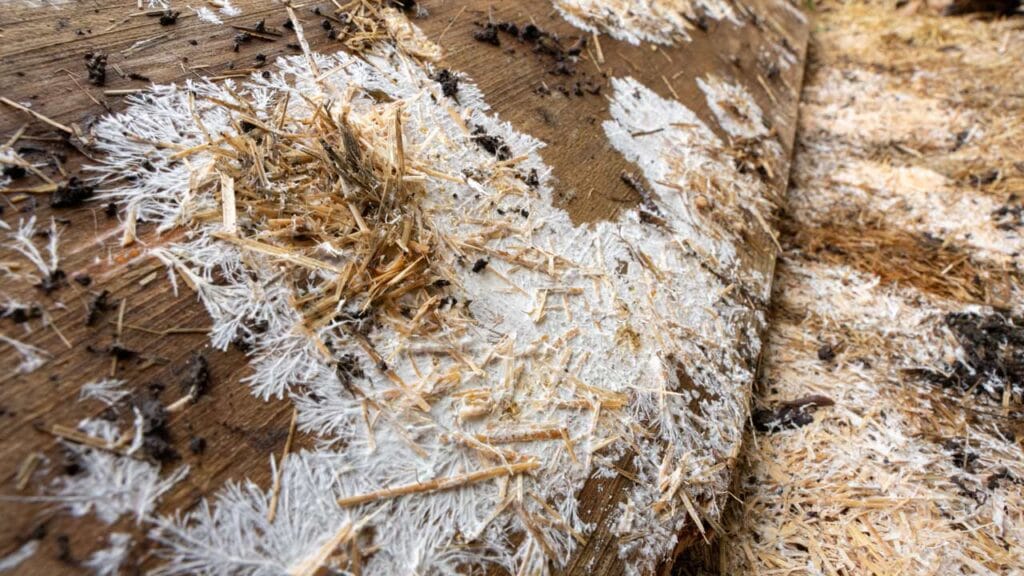
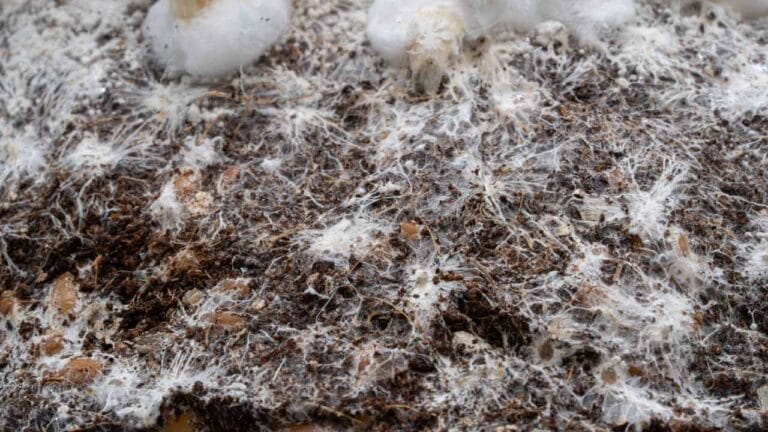
Mycelium is the vegetative part of a fungus and consists of a network of microscopically thin threads called hyphae. These hyphae grow on a nutrient medium or through a substrate and form a branched fungal network. Unlike plants, mycelium has no roots or leaves, but absorbs nutrients directly from its environment.
The mycelium is responsible for the growth, nutrient uptake, and survival of the fungus. In most cases, it lives hidden in soil, wood, or other organic material. Only under specific conditions does mycelium form a visible reproductive structure: the mushroom.
The role of mycelium in nature
In nature, mycelium fulfills an essential role as a decomposer of organic material. It breaks down wood, leaves, and plant residues and converts them into nutrients that become available to other organisms. This makes mycelium indispensable in nutrient cycles.
In addition, mycelium often forms symbiotic relationships with plants, known as mycorrhiza. In these relationships, mycelium supplies water and minerals to plants in exchange for sugars. This results in extensive underground networks that are sometimes described as the “internet of nature.”
The difference between mycelium and mushrooms
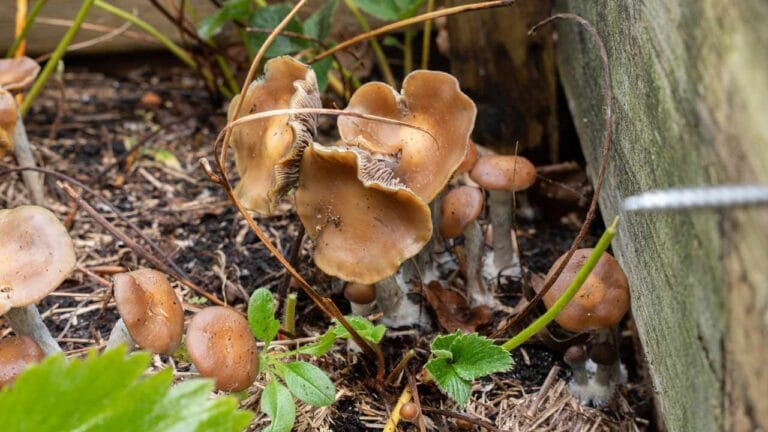
The difference between mycelium and mushrooms often causes confusion. Mycelium forms the actual body of the fungus, while the mushroom is the fruiting body. You can compare this to an apple tree: the mycelium is the tree, and the mushroom is the fruit.
From this division of roles arises their mutual dependence. Mushrooms are responsible for the reproduction of the fungus through the production of spores, but without healthy mycelium, they cannot develop. Together, mycelium and the mushroom form an inseparable whole, with the mycelium as the foundation and the mushroom as merely the visible result.
Cultivating mycelium
Cultivating mycelium is relatively straightforward, as it grows quickly and adapts well to different nutrient sources. With the right conditions—such as temperature, oxygen, moisture, and hygiene—mycelium can be successfully cultivated by both beginners and experienced growers.
Important factors in cultivating mycelium include:
- A suitable nutrient source
- Sufficient oxygen
- A stable temperature
- Appropriate (air) humidity
- Sterile working conditions to prevent contamination
There is a clear difference between cultivating mycelium for mushroom production and cultivating mycelium as a final product, for example, for materials or research. In the latter case, the focus is on structure, density, and volume—not on fruiting.
Growth media for mycelium
Depending on the goal of cultivation, mycelium can be grown on various growth media. These range from highly controlled laboratory media to natural, solid substrates.
Solid growth medium: agar
Agar is a solid, gel-like growth medium that is widely used for starting and maintaining fungal cultures. It provides a clear and sterile environment in which mycelial growth is easily visible.
Agar is used for:
- Germination of spores
- Isolation and selection of strains
- Crossing of different strains
- Long-term storage of strains
- Visual monitoring and study of growth and contamination

Liquid growth medium: sugar solution
A liquid growth medium, often referred to as liquid culture (LC), usually consists of a sugar solution in which mycelium can grow freely and rapidly.
Liquid culture is used for the following purposes and offers several advantages:
- Rapid multiplication
- Relatively long shelf life
- Easy inoculation
- Efficient use in larger cultivation processes

Solid substrates
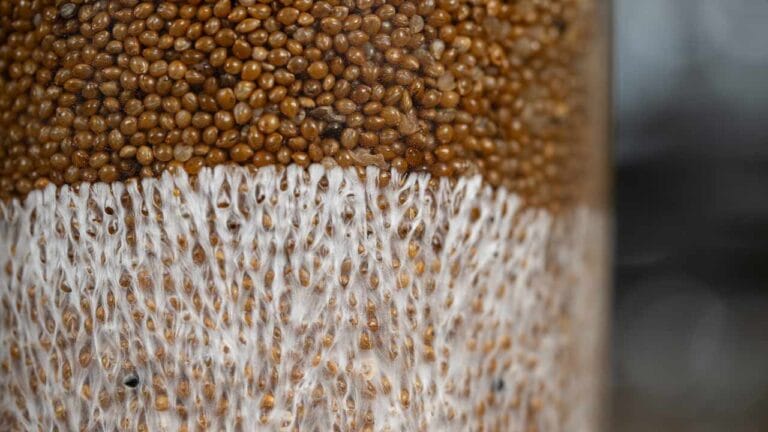
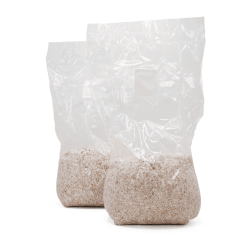
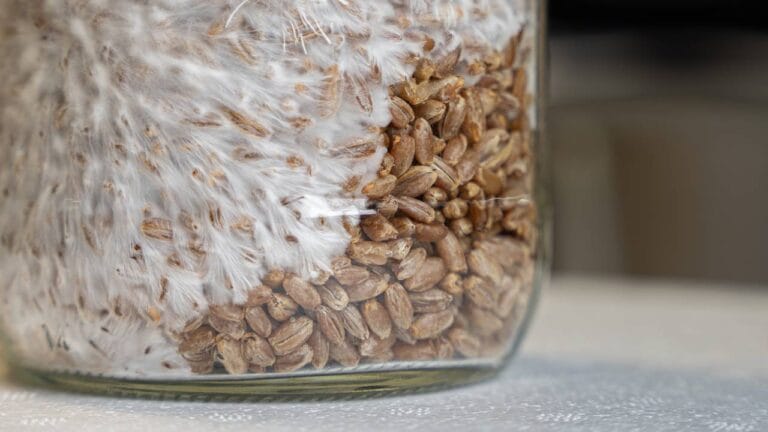
For scaling up, mycelium is often grown on solid substrates. These may include grains such as rye, millet, or brown rice, as well as organic materials like wood, sawdust, and coconut fiber. Mycelium that has fully colonized grains is often referred to as grain spawn and forms the basis for further scaling or inoculation of larger substrates.
Solid substrates are mainly used for:
- Multiplication of mycelium
- Maximizing yields
- Practical and industrial applications
Modern applications of mycelium
Mycelium is increasingly used as a sustainable and circular material. Because it grows on residual waste streams and requires little energy, mycelium fits well within the circular economy.
Current applications of mycelium include:
- Building materials such as insulation and lightweight panels
- Packaging materials as alternatives to plastic and polystyrene
- Fashion and design, such as mycelium leather
- Food and fermentation processes
Thanks to these properties, mycelium contributes to waste reduction, lower CO₂ emissions, and the reuse of raw materials.
Why mycelium is central here (and not the mushroom)
In these applications, the focus is not on the mushroom but on the mycelium itself. Mycelium forms a structure, binds materials, and can be grown in a controlled way in terms of shape and density. Mushrooms are often undesirable in this context, as they consume energy and can disrupt the material structure.
Because of these modern applications, mycelium is increasingly viewed as a living building material rather than merely a biological organism.


The invisible foundation of growth and innovation
Mycelium shows that the most important processes often take place beneath the surface. While mushrooms form the visible, reproductive part of the fungus, the foundation of this process lies in the mycelium.
From natural ecosystems to sustainable technologies, this fungal network forms the basis for growth, cooperation, and innovation. Those who understand mycelium begin to look differently at fungi—and at the possibilities of nature.