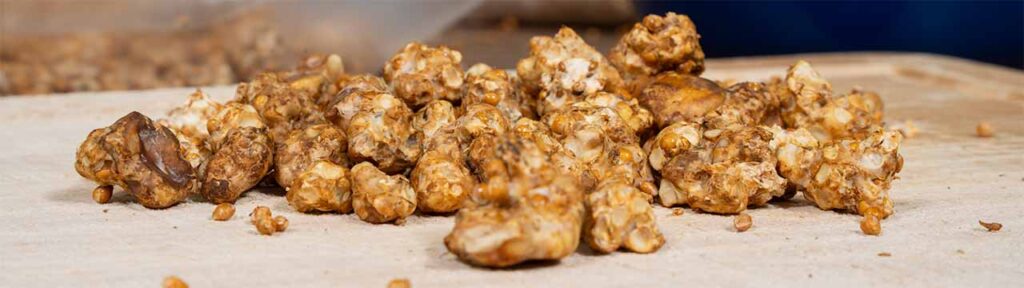
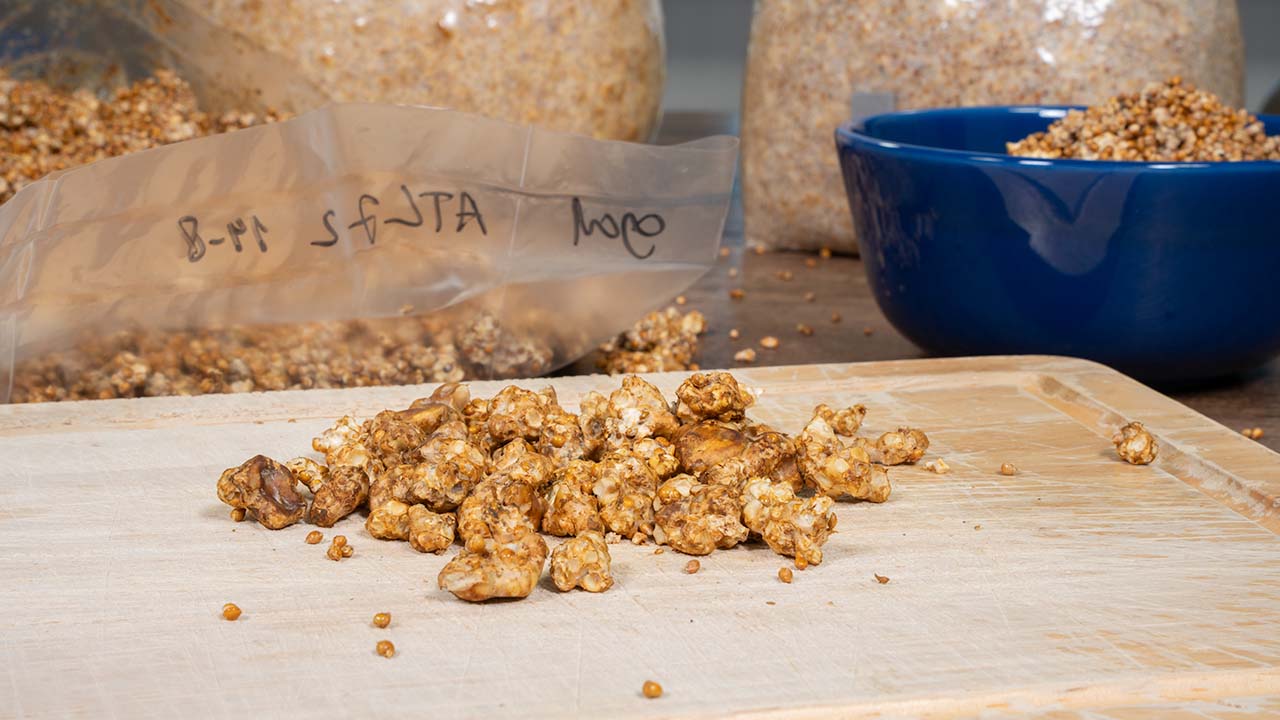
Magic truffles, also known as psilocybin-containing sclerotia, are fascinating not only because of their properties but also because of the way they grow. While mushrooms are fruiting bodies that develop on the surface of a substrate, magic truffles form as compact structures within the substrate itself. As a result, most of their development takes place out of sight.
But how does growing magic truffles actually work? What materials do you need, how long does the process take, and what exactly happens inside the substrate?
In this article, we’ll explain how to grow your own magic truffles step by step. Using photos from our own grow with Psilocybe galindoi ATL #7, we’ll also show you how the mycelium develops and what the resulting sclerotia look like at different stages.
Table of Contents
What exactly are magic truffles?
Magic truffles are often compared to magic mushrooms, but there is an important difference. While magic mushrooms are the fruiting bodies of a fungus, magic truffles develop as compact structures within the substrate.
These structures are called sclerotia. They consist of densely packed mycelium and serve, among other things, as a storage reserve for nutrients.
However, not all psilocybin-containing mushroom species are capable of forming sclerotia. Within the genus Psilocybe, Psilocybe mexicana, Psilocybe tampanensis, and Psilocybe galindoi are particularly well known for this ability.
These species can produce not only magic truffles but also regular mushrooms under the right conditions. Other species, such as Psilocybe cubensis, produce mushrooms but are not known to form sclerotia.
What do you need to grow magic truffles?
Growing magic truffles requires many of the same materials used for growing magic mushrooms. You only need a few basic supplies to get started.
What we recommend as a minimum:
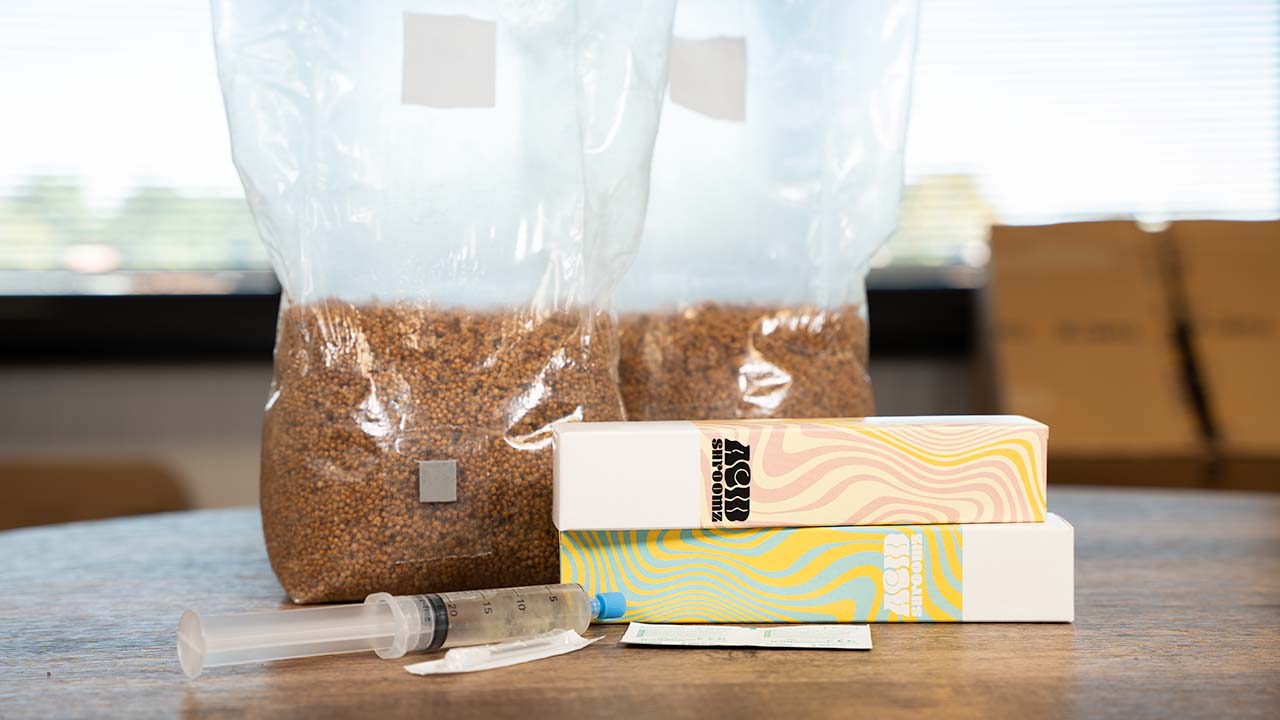
- Sterilized grain: A jar or grow bag filled with sterilized grain, equipped with a filter patch and injection port. Our favorite grain is millet, but other grains such as rye and wheat work well too. For more information about different grain types and how to prepare them, check out our grain spawn guide.
- Liquid culture or spore syringe: For introducing mycelium or spores into the grain.
- Alcohol wipes: For disinfecting the injection port.
- Suitable incubation space: A place where the temperature can be kept as stable as possible while the mycelium develops.
To further reduce the risk of contamination, you can optionally wear nitrile gloves and a face mask. You can also use a Still Air Box (SAB) or flow hood to work in a cleaner, more controlled environment. These additional precautions aren’t strictly necessary, but they can help improve your chances of a successful grow.
One important difference compared to growing mushrooms is that magic truffles don’t require a separate bulk substrate, such as CVG. Sclerotia can develop directly among the grain kernels without the need for any additional substrate.
How to grow magic truffles
Once you’ve gathered all the necessary supplies, you’re ready to start growing. Below, we’ll walk you through the process step by step, from inoculating the substrate to harvesting your own magic truffles.
Step 1: Prepare the liquid culture or spore syringe
Start by unpacking and preparing your liquid culture or spore syringe. First, remove the cap from the syringe and attach the included sterile needle. Make sure the needle is securely attached and leave the protective cap on for now.
Try to work as cleanly as possible during preparation, and avoid letting any sterile components come into contact with your hands or other surfaces.
Step 2: Disinfect the injection port
Set the syringe aside for a moment and grab the included alcohol wipe. Use it to thoroughly disinfect the injection port of the grain bag. This helps reduce the risk of bacteria or other unwanted microorganisms coming into contact with the sterile grain during injection.
Allow the alcohol to dry completely before moving on to the next step.
Step 3: Inject the liquid culture or spores
Next, remove the protective cap from the needle and inject the mycelium or mushroom spores through the injection port into the grain bag (or jar, if you’re using jars).
Make sure the needle doesn’t come into contact with any other surfaces during injection to minimize the risk of contamination.
Step 4: Mix the grain and let it colonize
After inoculation, gently massage the grain bag to distribute the mycelium or spores as evenly as possible throughout the grain.
Next, place the bag or jar in a warm incubation area at a temperature of around 26–28°C (79–82°F). This is where the colonization phase begins, as the mycelium gradually spreads throughout the grain.
The development of the mycelium
When using liquid culture, the mycelium can begin colonizing the grain almost immediately. Under favorable conditions, the first signs of growth are often visible within just 2–3 days.
Using a spore syringe? It may take a little longer before you see the first signs of growth. The spores need to germinate first, which can typically take 1–2 weeks.
Try to disturb the bag or jar as little as possible during incubation, and keep the conditions as stable as possible.
In the photos below, you can see how the mycelium develops over time, from the first visible signs of growth to the formation of magic truffles.
Harvesting your magic truffles
Harvesting is perhaps the most labor-intensive part of growing magic truffles. The sclerotia develop among the grain kernels, which can make them difficult to spot and collect.
During our own grow with Psilocybe galindoi ATL #7, we harvested 118 grams of fresh truffles from a bag containing 1.7 kg of hydrated grain. This was a relatively quick harvest, and we didn’t take the time to carefully collect all the smaller sclerotia from the grain.
We estimate that a yield of around 200–250 grams might have been possible if we had harvested more thoroughly and allowed the sclerotia to develop for longer, for example, over a period of 3–4 months. However, this is only an estimate and not a guaranteed yield.
The final yield can vary considerably depending on factors such as the species, genetics, and growing conditions.
Final thoughts on growing magic truffles
Growing magic truffles is an interesting process that differs from growing magic mushrooms in several ways. Although it requires a little more patience, it’s fascinating to see how the mycelium develops and eventually forms compact sclerotia.
One of the biggest advantages of growing magic truffles is that the process requires relatively little maintenance. Once everything is set up, the mycelium develops largely on its own, without the need for constant attention. After a few months, the sclerotia can be harvested.
Interested in the unique characteristics of sclerotia-forming Psilocybe species? Check out our magic truffle liquid cultures, including Psilocybe mexicana, Psilocybe tampanensis, and Psilocybe galindoi.