
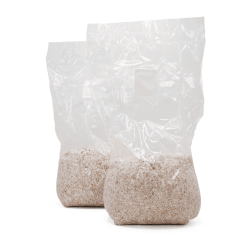

How to make wheat grain spawn: A step-by-step guide
Wheat grain is one of the most affordable and reliable grains for mushroom cultivation. It is widely available, easy to prepare, and provides thousands of inoculation points when mixed with

Grain spawn is one of the most widely used spawn types in mushroom cultivation. Whether you’re growing magic mushrooms or other cultivated mushroom species, it serves as the foundation for healthy mycelial growth and efficient colonization of bulk substrates.
In this article, you’ll learn about the most common types of mushroom grain spawn, compare their characteristics and discover which option best suits your cultivation goals. You’ll also find links to our detailed step-by-step guides for preparing each type of grain spawn.

Grain spawn is sterilized cereal grain that has been fully colonized by mushroom mycelium. Once the mycelium has spread throughout every kernel, the grain acts as both a carrier and inoculum, allowing vigorous mycelial growth to be transferred into a larger substrate.
The purpose of grain spawn is simple: instead of inoculating a bulk substrate directly with a small amount of culture, growers first expand the mycelial culture on nutrient-rich cereal grains. Besides multiplying the mycelium, the grains also serve as the primary nutrient source throughout the cultivation process. This is particularly important when using inert bulk substrates, such as CVG (coco coir, vermiculite and gypsum), which provide moisture, structure and aeration but little nutritional value.
Because every grain kernel acts as an individual inoculation point, the mycelium can spread simultaneously from hundreds or even thousands of locations throughout the substrate. As a result, colonization is faster and more uniform, giving competing molds and bacteria less opportunity to establish themselves before the mushroom mycelium takes over.
Grain spawn is commonly inoculated using liquid culture, agar cultures or existing grain spawn through a grain-to-grain transfer. Once fully colonized, it is typically mixed with an inert bulk substrate, such as CVG, straw or other suitable substrate recipes, depending on the mushroom species being cultivated.
Although preparing grain spawn requires careful sterilization and clean working techniques, it remains one of the most versatile and widely used spawn types in modern mushroom cultivation.

Grain spawn has become the standard choice for many mushroom growers because it combines excellent colonization speed with versatility and relatively low material costs. Whether you’re preparing a single grow bag or producing larger quantities of substrate, grain spawn offers several important advantages.
One of the biggest benefits of grain spawn is its ability to colonize bulk substrates quickly. Since every grain kernel contains actively growing mycelium, colonization begins from many different locations at once instead of spreading from a single inoculation point.
Grain kernels distribute evenly throughout bulk substrates, allowing the mycelium to spread consistently across the entire growing medium. This uniform distribution helps create an even, fully colonized substrate before fruiting begins.
Most cultivated mushroom species, including Psilocybe cubensis, can be propagated on grain spawn. While the ideal grain may vary between growers and mushroom species, rye, wheat, millet and brown rice all provide excellent nutritional sources for healthy mycelial growth.
Grain is widely available and relatively inexpensive in many parts of the world. Once you have the necessary equipment, grain spawn can easily be prepared in larger batches, making it suitable for both hobby growers and larger cultivation projects.

Despite its many advantages, grain spawn also has a few limitations.
Proper sterilization is essential because cereal grains naturally contain bacteria and fungal spores. Without adequate sterilization, contaminants can quickly outcompete mushroom mycelium.
In addition, preparing grain spawn requires specialized equipment and clean working techniques. Most growers sterilize grain using a pressure cooker or autoclave before inoculating it inside a still air box or in front of a laminar flow hood. After inoculation, the grain is often incubated in a temperature-controlled environment to encourage rapid colonization while minimizing temperature fluctuations.
If you don’t have access to this equipment or simply want to skip the preparation process, purchasing pre-colonized grain spawn can be a convenient alternative. Ready-made grain spawn is fully colonized, ready to use and allows you to move straight to the bulk substrate stage.
Finally, compared with wood-based spawn, grain spawn is generally more susceptible to contamination due to its rich nutritional content. Maintaining good sterile technique throughout the entire process is therefore essential for consistent success.
Although all grain spawn serves the same purpose, each grain has slightly different characteristics. Factors such as kernel size, moisture retention, preparation method and regional availability can all influence which grain is the best choice for your situation.
The table below provides a quick comparison of the four most commonly used grains.
| Grain | Difficulty | Colonization Speed | Cost | Availability | Best Suited For |
|---|---|---|---|---|---|
| Rye | Easy | Moderate | Moderate | Good | All-round grain spawn |
| Wheat | Easy | Moderate | Low | Excellent | Affordable all-purpose spawn |
| Brown rice | Moderate | Moderate | Moderate | Excellent | Small batches and beginners |
| Millet | Easy | Fast | Moderate | Varies by region | High inoculation point density |
No single grain is objectively better than the others. Instead, the ideal choice depends on several factors, including your cultivation goals, preferred preparation method, available equipment and, perhaps most importantly, which grains are easy to obtain in your region.
In the following sections, we’ll take a closer look at each grain individually, discussing its strengths, limitations and the situations in which it performs best.
Although all grain spawn serves the same purpose, not every grain behaves exactly the same. Kernel size, moisture retention, nutritional content and regional availability can all influence how easily a grain is prepared and how well it performs during cultivation.
Fortunately, there is no single “correct” choice. Many experienced growers simply use the grain that is easiest to source locally, while others prefer a particular grain based on personal experience or the mushroom species they cultivate.
The following grain types are among the most commonly used in mushroom cultivation.

Rye has long been considered one of the most reliable grains for mushroom cultivation. Its relatively large kernels are easy to prepare and shake after colonization, while their balanced nutritional profile supports vigorous mycelial growth across many cultivated mushroom species.
Because rye absorbs and retains moisture well without becoming excessively sticky, it generally produces loose, well-separated kernels when prepared correctly. This makes the spawn easy to shake and distribute evenly throughout a bulk substrate.
Rye is an excellent all-round choice for both beginners and experienced growers who want reliable, predictable performance.

Wheat is one of the most widely available grains in the world and has become increasingly popular among mushroom growers. It performs similarly to rye while often being easier to find and more affordable, particularly in regions where wheat is grown extensively.
When prepared correctly, wheat promotes vigorous mycelial growth and mixes easily with bulk substrates. Its widespread availability makes it an attractive option for growers looking for a dependable grain without paying premium prices.
Growers looking for an affordable, easy-to-source grain that performs well across a wide range of cultivation methods.

Brown rice offers an accessible alternative to traditional cereal grains and is readily available in most supermarkets. Although it is often associated with beginner cultivation methods, properly prepared brown rice can also produce excellent grain spawn.
Compared with rye and wheat, brown rice kernels are slightly softer and require careful hydration to prevent them from becoming overly moist. Nevertheless, when prepared correctly, they support healthy mycelial growth and reliable colonization.
Growers who want an easily obtainable grain, especially when rye or wheat are difficult to source locally.
Millet consists of very small grain kernels, allowing a single jar or spawn bag to contain thousands of individual inoculation points. For this reason, many experienced growers prefer millet when preparing spawn for larger bulk substrates.
Its small kernel size also allows the grain to distribute extremely evenly throughout bulk substrate, promoting fast and uniform colonization. Another advantage is that millet can be prepared using a simple no-boil, no-simmer method by soaking the grain before sterilization, making the preparation process both efficient and straightforward.
Growers seeking maximum inoculation point density, rapid bulk substrate colonization and a simple grain preparation method.

One of the most common questions among new growers is which grain produces the best spawn. The honest answer is that there is no universal winner.
All four grains discussed in this guide can produce healthy, vigorous grain spawn when prepared correctly. The differences between them are often smaller than many beginners expect. In practice, factors such as proper sterilization, clean inoculation techniques, and healthy genetics have a much greater impact on success than the grain itself.
For many cultivators, availability is ultimately the deciding factor. Choosing a grain that is inexpensive, easy to source and straightforward to prepare is often more practical than searching for a specific grain that offers only minor performance differences.
Having worked extensively with rye, wheat, brown rice and millet ourselves, we’ve achieved excellent results with all of them. However, millet has become our personal favorite because it is quick and easy to prepare using a no-boil, no-simmer method while consistently delivering vigorous mycelial growth and fast colonization.
The good news is that there is no wrong choice. Once you understand the preparation requirements for each grain, any of them can become the foundation for healthy, contamination-free mushroom cultivation.
Preparing grain spawn from scratch offers flexibility and excellent results, but it isn’t the only way to cultivate mushrooms. Several alternative methods simplify the process by reducing the amount of preparation, equipment or sterile work required.
While these methods may not replace traditional grain spawn for every grower, they can be excellent options for beginners or anyone looking for a more convenient approach.

Uncle Ben’s Tek replaces self-prepared grain spawn with commercially sterilized microwave rice pouches. Instead of preparing, hydrating and sterilizing grain yourself, the rice is inoculated directly through the sealed bag.
Its simplicity has made the technique particularly popular among beginners, as only minimal equipment is required to get started.
PF Tek is one of the earliest mushroom cultivation methods developed specifically for beginners. Instead of using whole grain, it relies on sterilized cakes made from brown rice flour, vermiculite and water.
After colonization, these cakes can be fruited directly or used in other cultivation techniques.
All-in-one grow bags combine sterilized grain and bulk substrate inside a single filter patch bag. After inoculation, the grain colonizes first before being mixed with the substrate inside the same bag, eliminating several preparation steps.
This makes them an attractive option for growers who want to simplify the cultivation process without preparing separate grain spawn and bulk substrate.
Grain spawn is sterilized cereal grain that has been fully colonized by mushroom mycelium. It acts as an intermediary between a pure culture, such as liquid culture or agar, and a bulk substrate. Once mixed with the substrate, the colonized grain rapidly spreads mycelium throughout the growing medium.
There is no universally best grain. Rye, wheat, millet and brown rice all produce excellent grain spawn when prepared correctly.
The right choice depends on your experience, preferred cultivation method and, most importantly, which grains are readily available in your region. Proper preparation and sterile technique generally have a much greater influence on success than the grain itself.
Not necessarily.
Rye has traditionally been one of the most popular grains because it is easy to prepare and performs consistently. However, wheat offers very similar performance and is often less expensive or easier to source.
For most growers, either grain is an excellent choice.
Yes.
Although brown rice requires careful preparation to prevent overly soft or sticky kernels, it can produce healthy, vigorous grain spawn. Its widespread availability also makes it an excellent option when rye or wheat are difficult to obtain.
For traditional grain spawn, yes.
Most cereal grains require sterilization under pressure to eliminate bacteria and fungal spores before inoculation. A pressure cooker is therefore considered essential for preparing reliable grain spawn at home.
If you do not own one, beginner-friendly alternatives such as Uncle Ben’s Tek or commercially prepared all-in-one grow bags may be worth considering.
Freshly colonized grain spawn is best used as soon as possible.
When stored in a refrigerator, most grain spawn remains viable for several weeks to a few months, depending on the mushroom species, storage temperature and overall health of the mycelium.
For the best colonization speed and overall performance, use fresh spawn whenever possible.
Freezing is generally not recommended.
Ice crystal formation can damage the mycelium and significantly reduce its viability. Refrigeration provides a much safer way to slow mycelial growth while keeping the culture healthy.
Yes, provided they are suitable whole grains without added ingredients.
Many growers successfully prepare grain spawn using supermarket wheat or brown rice. In some regions, rye or millet may also be available through supermarkets, health food stores or agricultural suppliers.
Regardless of the grain you choose, proper preparation and sterilization remain essential.

Grain spawn is the foundation of many successful mushroom cultivation projects. By allowing mushroom mycelium to colonize nutrient-rich grains first, growers can quickly inoculate larger bulk substrates and achieve faster, more even colonization.
Fortunately, there is no single grain that outperforms all others. Rye, wheat, brown rice and millet are all capable of producing excellent grain spawn when prepared correctly. The best choice depends on factors such as regional availability, personal preference and the cultivation method you intend to use.
For those looking for a simpler approach, alternatives such as Uncle Ben’s Tek, PF Tek and all-in-one grow bags offer accessible ways to begin growing mushrooms without preparing traditional grain spawn from scratch. Another convenient option is to purchase ready-made grain spawn, allowing you to skip grain preparation entirely and move directly to bulk substrate inoculation.
Whichever method you choose, success depends far more on proper preparation, effective sterilization and clean working techniques than on the specific grain itself. By mastering these fundamentals, you’ll be well on your way to producing healthy grain spawn and achieving consistent results in future grows.
Wheat grain is one of the most affordable and reliable grains for mushroom cultivation. It is widely available, easy to prepare, and provides thousands of inoculation points when mixed with

If you’ve ever harvested a magic mushroom and watched blue patches appear on the stem a few minutes later, you’re not alone. Blue bruising is one of the most recognizable